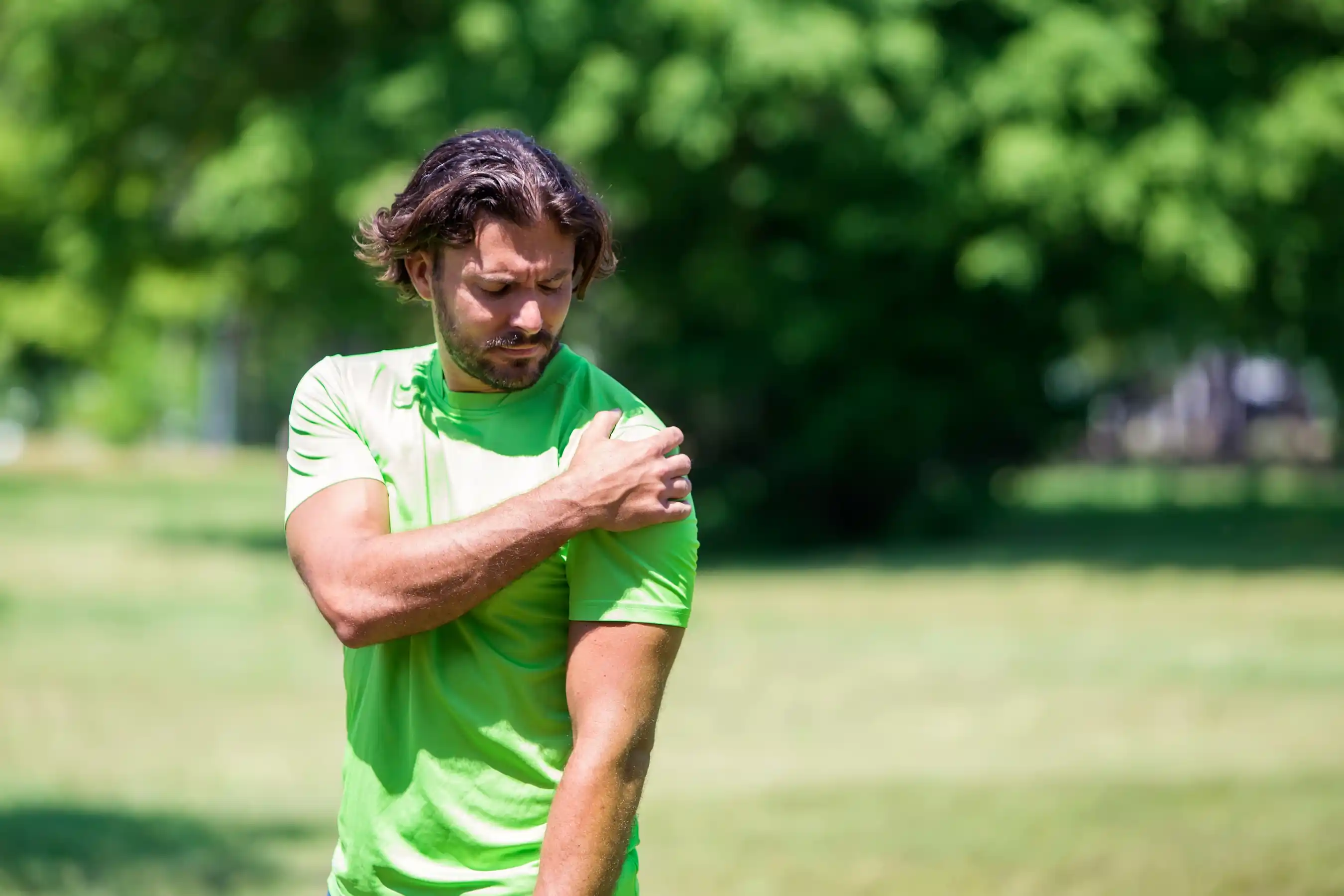
Key Takeaways
- Overhead-throwing motions in fall sports like football and volleyball place repetitive stress on the rotator cuff, the group of muscles and tendons that stabilize the shoulder joint.
- Football, volleyball, and quarterback or setter positions in particular put student and recreational athletes at higher risk of rotator cuff strain and tears this time of year.
- Ordinary muscle soreness usually fades within a day or two, while warning signs like night pain, weakness, or a sudden 'pop' point to something more serious.
- A repetitive overuse strain develops gradually and behaves differently from a sudden traumatic tear, and telling them apart shapes how quickly treatment should start.
- Dr. Mark Yaffe is a board-certified orthopedic specialist serving Buffalo Grove, Elk Grove Village, and Schaumburg, IL, and student and recreational athletes can request an appointment for evaluation before 'playing through it' causes lasting damage.
Why Fall Sports Season Puts the Shoulder at Risk
Across the Chicago area, fall means football under the lights, club volleyball tournaments, and weekend rec leagues picking back up. It's also the season Dr. Yaffe sees a noticeable uptick in shoulder complaints, particularly among athletes whose sport depends on repeated overhead motion: quarterbacks and wide receivers throwing and blocking, volleyball hitters and setters, and swimmers and tennis players extending their fall training. The shoulder simply isn't built to tolerate thousands of repetitive overhead motions without support, and the structure that pays the price first is almost always the rotator cuff.
Why Overhead-Throwing Motions Strain the Rotator Cuff
The rotator cuff is a group of four muscles, the supraspinatus, infraspinatus, subscapularis, and teres minor, whose tendons wrap around the head of the humerus (upper arm bone) to hold it securely in the shallow shoulder socket. This design is what gives the shoulder its extraordinary range of motion, but it also means the joint relies heavily on soft tissue, rather than bone, for stability.
Every time an athlete throws, spikes, or serves, the rotator cuff has to decelerate the arm at high speed immediately after accelerating it, a demand that generates enormous repetitive stress on the tendons. Over a single practice or game, that stress is manageable. Over a full fall season of practices, games, and tournaments, it can accumulate faster than the tissue can recover, especially without adequate rest between sessions.
Common Fall Sports Linked to Rotator Cuff Injuries
Not every fall sport carries the same shoulder risk, but several stand out for how often Dr. Yaffe sees rotator cuff strain and tears connected to them:
- Football, especially quarterbacks and any position involving repeated throwing, blocking, or falls onto the shoulder
- Volleyball, where hitters and setters perform hundreds of overhead swings and serves per week
- Swimming, where freestyle and butterfly strokes repeat the same overhead pattern thousands of times per practice
- Tennis, particularly serving and overhead groundstrokes
- Cross country and soccer, less directly, but falls and collisions can still cause traumatic shoulder injuries during fall training
Athletes who play more than one of these sports, or who compete on both a school team and a club team in the same season, face a compounding risk since their shoulders rarely get a true rest period.
Common Fall Sports Injuries: Muscle Soreness vs. Rotator Cuff Injury
| Feature | Normal Muscle Soreness | Rotator Cuff Strain or Tear |
|---|---|---|
| Onset | Gradual, after activity | Gradual (overuse) or sudden (traumatic tear) |
| Duration | Improves within 24 to 48 hours | Persists or worsens over days to weeks |
| Location | General, across the shoulder or upper back | Specific, often front or side of the shoulder |
| Night pain | Rare | Common, especially lying on the affected side |
| Weakness | Not typical | Often present, especially lifting the arm |
| Response to rest | Resolves fully | Improves slightly, then returns with activity |
| Range of motion | Normal after warm-up | Often limited or painful in certain positions |
If soreness is following this second pattern, especially heading into the second or third week of the season, it's worth having the shoulder evaluated rather than assuming it will 'work itself out.'
Warning Signs That Go Beyond Normal Muscle Soreness
Athletes and parents in the Chicago area should watch for these signs that suggest more than routine soreness:
- Pain that lingers more than a few days after rest and ice
- Pain that wakes the athlete up at night or makes it hard to sleep on that side
- Weakness when lifting the arm overhead or away from the body
- A 'popping,' 'catching,' or grinding sensation with certain movements
- A visible drop-off in throwing velocity, serving power, or hitting accuracy
- Pain during everyday tasks unrelated to sports, like reaching behind the back
- A sudden sharp pain or 'pop' during a specific play, serve, or dive
According to the American Academy of Orthopaedic Surgeons, people with a rotator cuff tear may have pain when they lie on the painful side at night, and the pain and weakness in the shoulder may make routine activities, such as combing your hair or reaching behind your back, more difficult. These are exactly the signs that separate a rotator cuff problem from ordinary soreness.
How Repetitive Stress Differs From a Sudden Traumatic Tear
Not all rotator cuff injuries develop the same way, and understanding which type an athlete is dealing with changes the conversation with a specialist.
Overuse strain builds gradually over weeks of repetitive throwing, hitting, or swimming. Pain often starts as mild discomfort that only appears during or after activity, then slowly becomes more frequent and more intense. This pattern is especially common in student athletes ramping up practice volume at the start of a season.
Traumatic tears happen suddenly, often from a fall, a collision, or an awkward attempt to catch oneself. According to the AAOS, tears that happen suddenly, such as from a fall, usually cause intense pain, and there may be a snapping sensation and immediate weakness in the upper arm.
Both patterns can result in a genuine rotator cuff tear, but the traumatic version tends to demand a faster evaluation since the tear may be larger or more likely to worsen without early treatment.
When Chicago-Area Athletes Should See a Shoulder Specialist
A general rule Dr. Yaffe shares with student and recreational athletes: if shoulder pain hasn't meaningfully improved after 3 to 5 days of rest, ice, and reduced throwing or hitting volume, it's time for an evaluation. Athletes should seek care sooner, ideally within a day or two, if they experience:
- A sudden pop or snap during play
- Significant weakness that limits lifting the arm
- Visible swelling, bruising, or deformity
- Pain severe enough to affect sleep
- Numbness or tingling down the arm
Getting evaluated early doesn't mean an automatic trip to surgery. Many overuse-related rotator cuff injuries respond well to activity modification, targeted physical therapy, or biologic injection therapy when caught before they progress into larger tears. Traumatic injuries and more advanced tears may benefit from Dr. Yaffe's minimally invasive surgical techniques, which use small incisions and modern anchor technology to speed recovery.
For a broader look at other fall sports injuries affecting the hand, wrist, and elbow, Dr. Yaffe's practice has also published a detailed guide on common upper extremity sports injuries to watch for this fall.
Don't Let Rotator Cuff Strain Turn Into a Bigger Problem
Fall sports season puts real, repetitive demand on the rotator cuff, and the difference between simple soreness and a developing injury often comes down to how long the pain sticks around and how it responds to rest. Catching a strain early, before it becomes a tear, is one of the best ways to keep student and recreational athletes on the field.
If shoulder pain from throwing, hitting, or swimming isn't fading the way normal soreness should, request an appointment with Dr. Mark Yaffe at his Buffalo Grove, Elk Grove Village, or Schaumburg, IL office today.
Frequently Asked Questions
Why do fall sports cause so many shoulder injuries?
Fall sports like football and volleyball involve repeated overhead throwing, hitting, and serving motions that place high, repetitive stress on the rotator cuff. Without adequate rest between practices and games, the tendons can develop overuse strain that progresses toward a tear if it isn't addressed.
How can I tell if my shoulder is just sore or actually injured?
Normal muscle soreness typically improves within 24 to 48 hours of rest and doesn't limit strength or motion once warmed up. A rotator cuff injury tends to linger, cause pain at night, weaken the arm, or produce a catching or popping sensation. If pain outlasts a few days of rest, it's worth having a specialist take a look.
What is the difference between rotator cuff strain and a rotator cuff tear?
A strain typically means the tendon fibers are irritated or mildly stretched from overuse, while a tear involves an actual break in the tendon tissue, which can be partial or complete. Strains often improve with rest and therapy, while tears, especially larger or traumatic ones, may need more advanced treatment to heal properly.
Where can I find a shoulder specialist near me in the northwest Chicago suburbs?
Dr. Mark Yaffe is a board-certified orthopedic surgeon with subspecialty certification in hand surgery, treating rotator cuff and other shoulder conditions at his offices in Buffalo Grove, Elk Grove Village, and Schaumburg, IL.
When should a young athlete see a doctor for shoulder pain from throwing?
A young athlete should be evaluated if shoulder pain lasts more than 3 to 5 days despite rest, if it's severe enough to affect sleep, if there's noticeable weakness or a drop in throwing performance, or if the pain began suddenly during a specific play or motion. Early evaluation helps prevent a manageable strain from progressing into a larger tear.
